
Québec City: Where History, People, and Innovation Shape Tomorrow

Our next destination was Québec City, where history, sustainability, and innovation intersect. From exploring the city’s strategic past as the cradle of French civilization in North America to engaging with forward-thinking entrepreneurs and researchers, each experience revealed how deeply human values, cultural identity, and technological progress shape the cities of tomorrow.
A Journey Through Time in Québec City
Beyond Québec City’s picturesque charm, the city offered our delegation a profound look at how its deep-rooted French heritage continues to shape its strategic, cultural, and economic identity today.
Stepping into the Old Town (Vieux-Québec), the French influence is immediate and intentional. As the cradle of French civilization in North America, Québec City was designed not just as a settlement, but as a statement of power. During our guided tour, we traced this history back to 1608, exploring how the French crown established a permanent foothold that transformed the St. Lawrence River into a vital artery for the North American fur trade and transatlantic commerce. We learned about the strategic importance of the massive stone walls and the complex system of batteries. These fortifications were the French response to the constant threat of British naval sieges, aiming to control the St. Lawrence River, the most critical gateway into the heart of the continent.

Today, these ramparts, the only remaining city walls north of Mexico, are more than just a military relic; they are a symbol of resilience. From a business and political perspective, this history explains Québec’s unique standing within Canada. The city’s ability to preserve its French identity despite centuries of British rule demonstrates a level of cultural persistence that still dictates its economic and administrative policies today.
Understanding these defensive layers is essential to grasping the Canadian identity. It reminds us that "Designing Tomorrow" requires a deep respect for the historical forces and strategic decisions that continue to influence international relations and trade dynamics.

Sustainability Starts With People
During a talk on Saturday afternoon, entrepreneur Émilie Pelletier shared a perspective that reshaped how we think about sustainability. Beyond infrastructure, innovation, and efficiency, she emphasized something often overlooked: sustainability starts with people, especially with how organizations treat their employees as human beings.
Her approach to entrepreneurship is deeply rooted in this belief. As a female entrepreneur, she highlighted the importance of building businesses that value individuality, trust, and personal expression. Employees are not just executing tasks; they are shaping experiences, culture, and impact.
This idea strongly resonates with what we explore at connectUS. While cities invest in smart systems and sustainable technologies, the real driver of long-term change lies in engaged, empowered people. When individuals feel valued, their work becomes meaningful, and sustainability becomes something that is lived, not just planned.
What we take away is simple but powerful: truly sustainable cities and organizations are not defined by systems alone, but by the people behind them.
A huge thank you goes to Émilie for her truly inspiring story and perspectives on Female Entrepreneurship.

Inclusive Cities and Digital Innovation: Our Visit to Université Laval
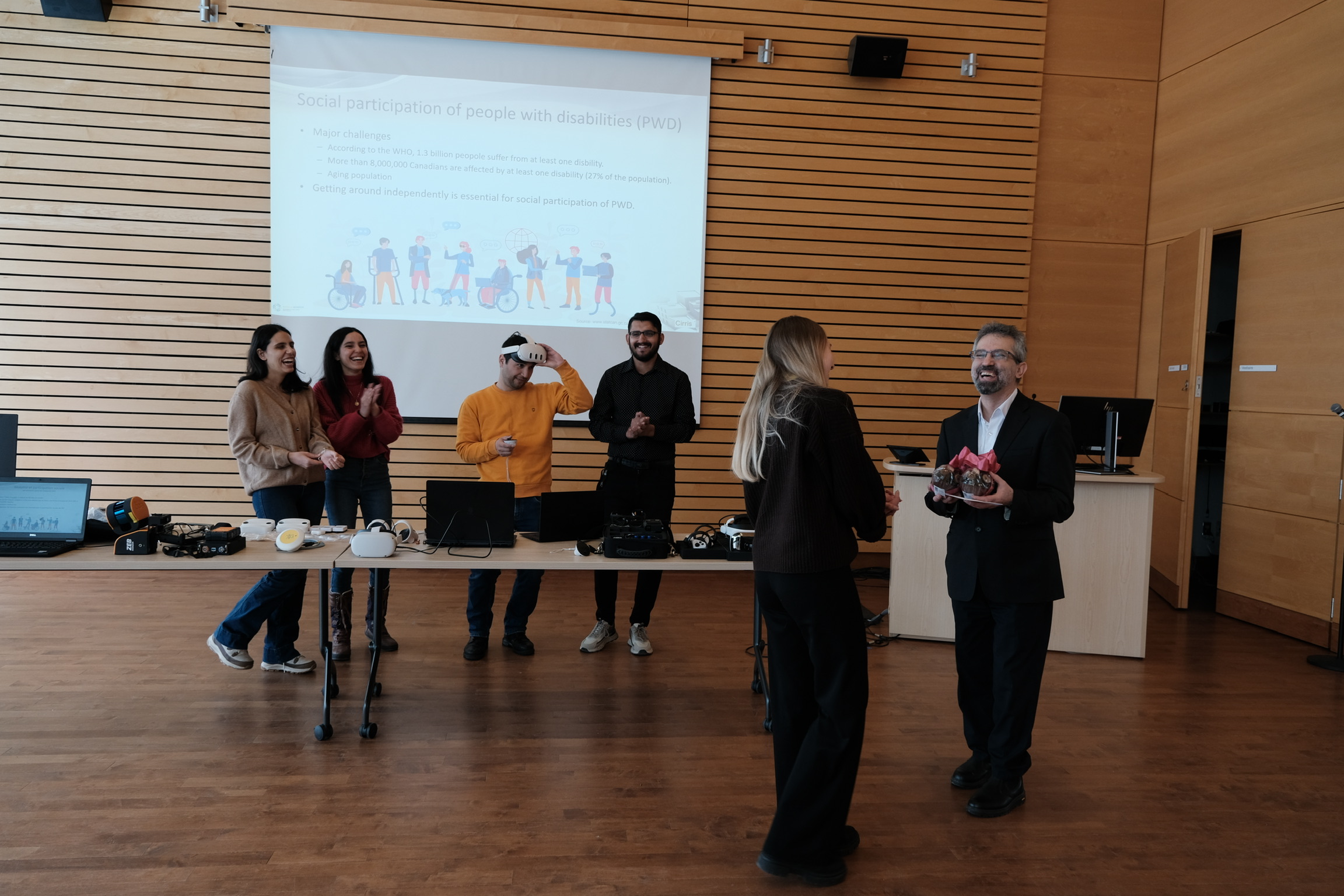
As part of connectUS, we visited Université Laval to explore how research can directly shape the cities of the future. We had the opportunity to meet Mir Abolfazl Mostafavi and several members of his team, who are working at the intersection of urban systems, data, and human behavior.

The university stands out as Canada’s first carbon-neutral campus and runs around 260 research projects per year. A key takeaway: demographic change is already pushing cities to adapt. Aging populations and increasing diversity require more inclusive environments.

Accessibility was a central focus. With over 1.3 billion people worldwide living with disabilities, independent mobility becomes essential for social participation.
One promising approach is the use of digital twins, data-driven models of real environments. Using technologies like LiDAR, VR/AR, and wearable sensors, researchers can identify barriers and design better navigation systems, especially for people with disabilities.
For us at connectUS, the takeaway is clear: accessibility must be built into systems from the start, not treated as an afterthought.
Our time in Québec City highlighted a clear message: designing the future requires more than innovation alone. It demands an understanding of history, a commitment to inclusivity, and a strong focus on people. Whether through preserving cultural identity, empowering individuals within organizations, or building accessible urban systems, sustainable progress is ultimately human-centered. These lessons will continue to guide our perspective as we move forward to Montréal, our last destination.
Reach Out & Become a Partner
Contact Us Here
