
Ottawa in Perspective: Rethinking History, Cities, and Collaboration

An Inspiring Evening at the Swiss Embassy in Ottawa
We spent our first evening in Ottawa at the Embassy of Switzerland in Canada, an ideal setting to start our stay in Ottawa.
There, we had the pleasure of meeting Ambassador Olaf Kjelsen and Urs Obrist the Senior Science and Technology Counsellor at the Embassy.

The exchange offered valuable insights into diplomatic work and Switzerland’s role abroad. We discussed international collaboration, innovation, and the importance of cross-border dialogue.

The evening concluded with an apéro riche, creating a relaxed setting to continue conversations and strengthen connections.

Encounters like this show that meaningful collaboration often starts with open dialogue.
Rethinking History at the Canadian Museum of History
Some places don’t just present history, they challenge the way you understand it. The Canadian Museum of History in Ottawa is one of them.
From the very beginning, it became clear that the museum is not trying to tell one single story. Instead, it creates space for multiple perspectives, especially those of Indigenous communities, who are presented not as a side note, but as an essential part of Canada’s identity.
One striking example was the concept of Inukshuk; stone landmarks traditionally used for navigation in the Arctic, helping people find their way home. More than just objects, they represent knowledge, survival, and cultural continuity.

At the same time, the museum does not avoid difficult parts of history. It addresses how Indigenous cultures were systematically suppressed, for example through separate school systems that aimed to erase cultural identity.
What stood out was the museum’s approach to representation. Instead of speaking for Indigenous communities, it increasingly gives them the space to represent themselves. This shift is also reflected in small but powerful practices, such as access policies based on self-identification, removing barriers and acknowledging lived identity.
Another powerful story was that of Terry Fox, whose legacy continues to bring people together across the country. Annual runs held in his name every September show how collective memory and shared values remain an active part of Canadian identity.

Ultimately, the museum presents Canada not as a finished story, but as an evolving one. It shows that understanding a country means embracing its complexity, its tensions, and the voices that shape it.
Interestingly, Ottawa itself reflects this layered perspective, it is geographically closer to Paris than to Canada’s west coast.

Urban Planning in Canada’s Capital
Urban planning in Canada’s capital region is anything but straightforward. The work of the National Capital Commission (NCC) makes this complexity particularly visible.
Ottawa, while located in Ontario, directly borders Québec, which means that planning does not happen within a single system. Different provincial frameworks, regulations, and priorities come into play. Moreover, each municipality develops its own plans, making coordination essential. Questions of where and how development should take place therefore requires constant alignment between municipal, provincial, and federal levels.

As a result, urban development is shaped by different actors with different priorities, which do not always align.
Traditionally, urban design in the capital has focused on institutional buildings and green spaces, since parks and public areas play a central role in shaping the city’s identity. However, the growing housing crisis is shifting priorities. Questions around affordable housing, land use, and available resources are becoming increasingly urgent, challenging existing planning approaches. At the same time, developing a deeper understanding of Indigenous perspectives is essential for more inclusive and informed decision-making in the future. Andrew Sacret, Kelly McRae, Ted Horton, Pat Bunting and Martin Barakengera shared their individual perspectives which encouraged a rich conversation. We would like to thank them for their forthcoming and inviting nature.
Urban planning is not a fixed process but rather a spectrum, evolving through different stages, scales, and actors. Rather than following a single plan, it is shaped by negotiation, coordination, and the need to balance competing interests.
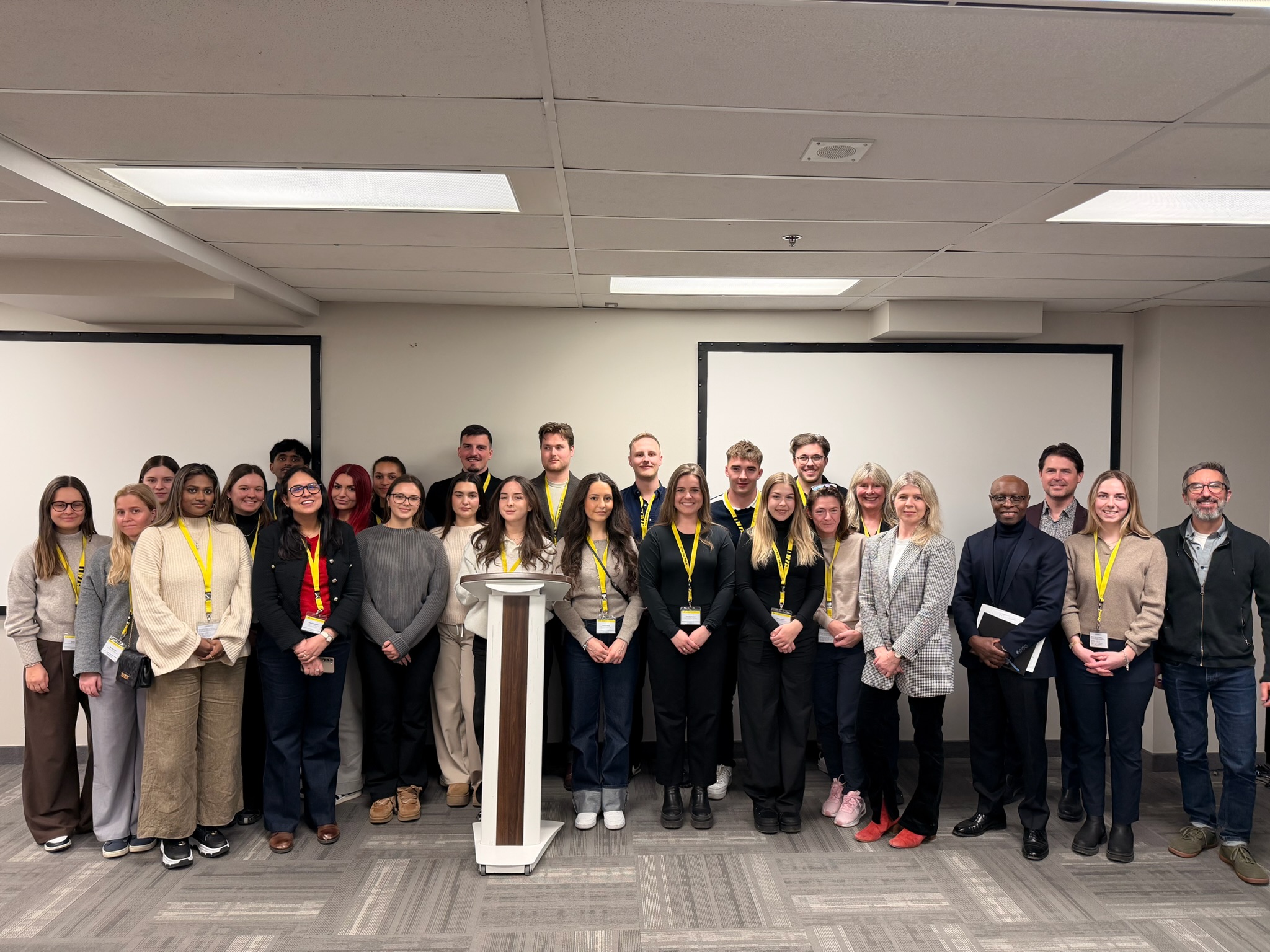
Towards Sustainable Cities: Challenges and Perspectives from Ottawa
At the University of Ottawa, we had a fascinating discussion on urban development in Canada, exploring how cities function in a context where space and resources are no longer unlimited. In Ottawa, this complexity is visible in the governance structure, where land is divided between municipal and federal ownership and the city itself lies between two provinces. Planning therefore requires constant coordination across different systems and levels.
At the same time, scale plays an important role. Ottawa is geographically as large as London, yet far less dense. While space has long been seen as abundant, increasing urbanisation shows that this is changing. Cities depend on continuous flows of food, energy, and people, often described as “metabolic relations”, making them both dynamic and vulnerable. As major contributors to climate change, they must find ways to remain liveable while reducing their environmental impact.

Our discussion also highlighted differences between Canada, Switzerland, and Europe.In Europe, sustainability and regulation are more deeply embedded, and cities tend to be denser, with strong neighbourhood structures and active public life. In Canada, urban development is often more dispersed, with families moving to suburban areas due to limited and expensive housing in city centres. While awareness of sustainability is growing, the transition towards more integrated and long-term solutions is still evolving.
Overall, the exchange emphasised that addressing these challenges requires both structural and cultural change - from greener buildings and improved infrastructure to a broader shift in awareness. Ultimately, sustainable urban development is not a fixed solution, but an ongoing process that depends on coordination, adaptation, and the willingness to rethink how we live in cities. We are very thankful for all the insights given by Director Vincent Mirza and Prof Daina Mazutis.

Looking back at our time in Ottawa, one key insight stands out: cities, and the societies behind them, are constantly evolving processes shaped by multiple perspectives. Whether at the Canadian Museum of History or in discussions on urban planning, a common theme emerged: complexity cannot be simplified, it must be understood and managed. Ultimately, shaping the future requires dialogue, inclusion, and the ability to navigate different viewpoints, defining not only cities, but the way we live in them.
Reach Out & Become a Partner
Contact Us Here
