
Insights into the American Politics, Culture and Business
US Politics and Markets in Focus
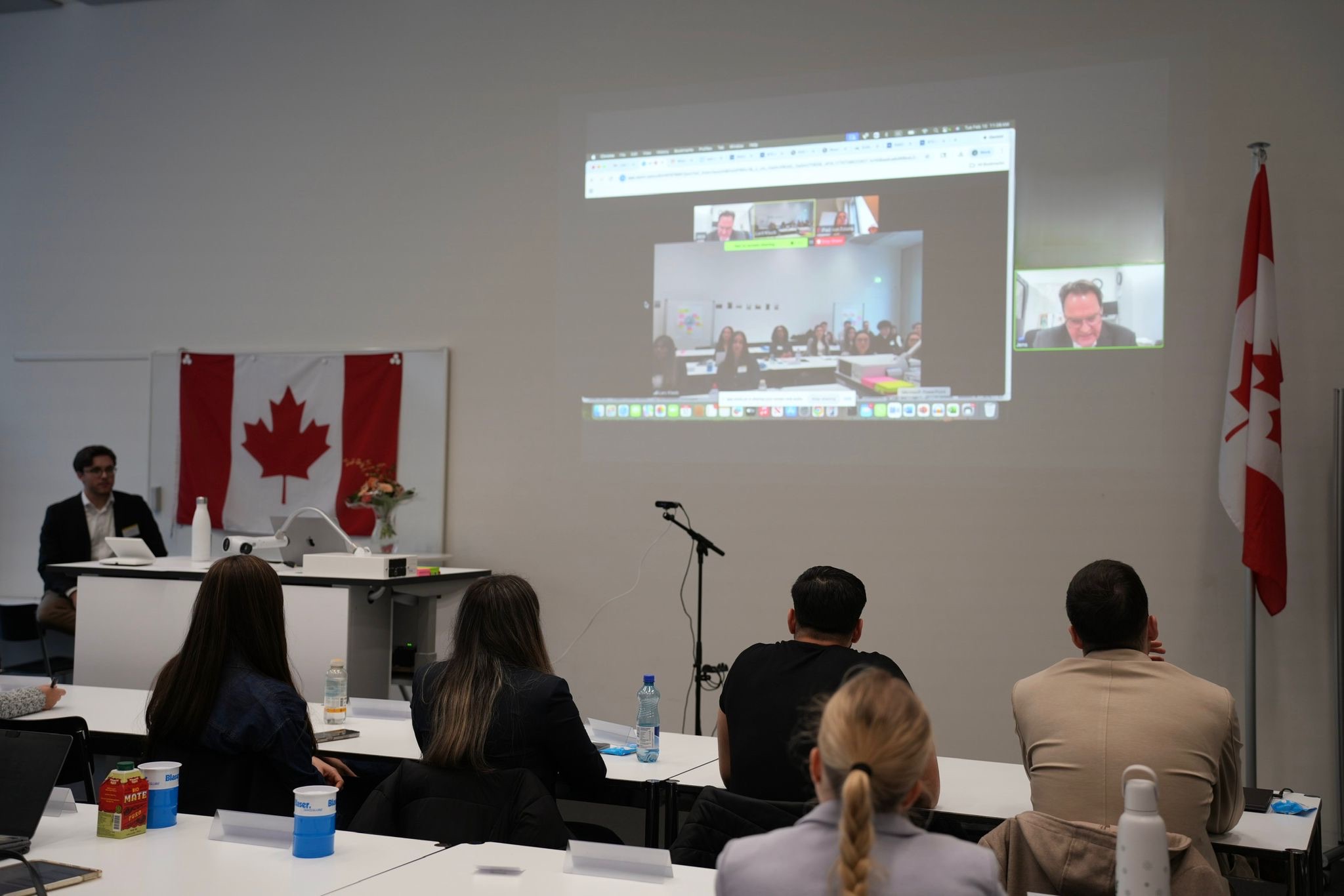
On the second day of the connectUS Seminar in Switzerland, we gained first-hand insights into the current political and economic landscape of the United States. Joining us live from New York City, Jens Korte, President and Senior Correspondent of the New York German Press, provided an analysis that went beyond headline-driven narratives, offering valuable insights into the interaction between policy decisions, market dynamics, and institutional power.
Economic Uncertainty and Tariff Impacts
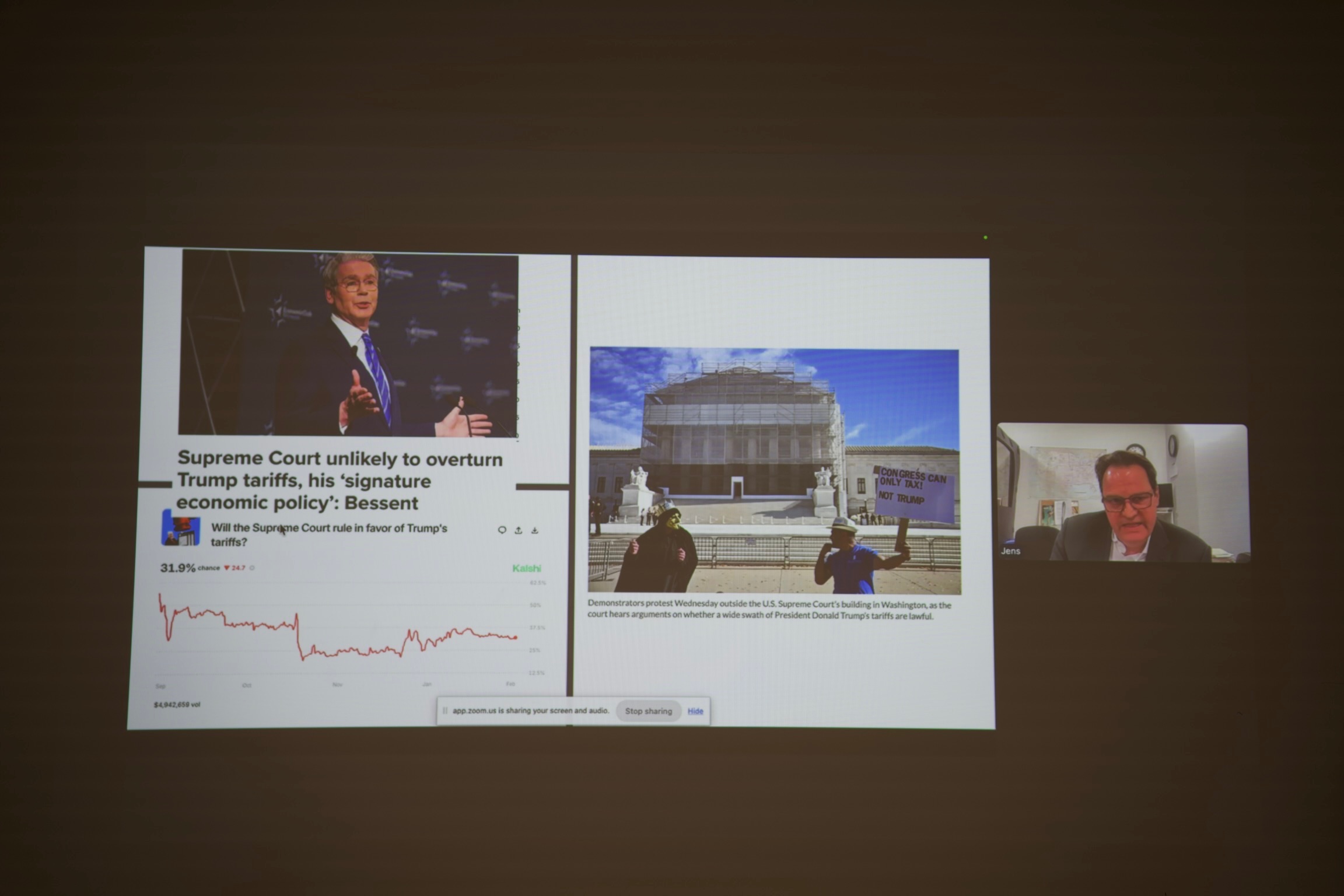
The economy of the United States is currently being shaped by a high level of uncertainty. The tariff situation was described as highly unusual and disruptive, with tangible effects on businesses and consumers alike. Retail sales in 2025 were disappointing, largely due to rising prices caused by tariffs. This development is particularly significant given that consumption remains the primary driver of economic growth in the United States.
Unequal Distribution of Economic Growth
Jens Korte also addressed the uneven distribution of economic benefits. The session revealed that the top ten percent of earners are responsible for more than half of total consumer spending in the U.S. This level of concentration raises important questions about who truly benefits from economic growth, and whether positive macroeconomic indicators accurately reflect the reality experienced by the majority of the population.
State Influence and Strategic Interests
Furthermore, the growing involvement of the state in economic affairs is noteworthy, as evidenced by the close intertwining of political leadership and business interests in the current political environment. Government involvement through strategic deals and stakes in private companies has become increasingly visible, extending from domestic markets into foreign policy. Referencing the Monroe Doctrine, the discussion emphasised that U.S. strategic interests span from the Arctic to Argentina, particularly regarding energy and oil production.
The Federal Reserve and Institutional Independence
Regarding the topic of institutional independence concerning the Federal Reserve, Jens Korte examined the increasing polarisation of monetary policy and discussed concerns about potential political pressure and the institution's long-term independence. Although immediate disruption appears unlikely, future policy decisions may be subject to greater pressure to cut interest rates.
From Buttonwood to Algorithmic Trading
Lastly, the session examined how financial markets have evolved. From the establishment of the New York Stock Exchange under the Buttonwood Agreement in 1792 to the current algorithm-driven trading environment, markets have undergone significant changes. Speed, automation and data transmission now dominate trading, often reducing the need for human decision-making, while platforms continue to generate revenue through payment for order flow.
Conclusion: Understanding Structures Beyond Headlines
Jens Korte's insights encouraged us to look beyond surface-level narratives and develop a deeper understanding of the structures, power dynamics and economic forces that shape the United States today.
Reach Out & Become a Partner
Contact Us Here
