
Insights from the Swiss Federal Office regarding Urban Design
Insights into Swiss Spatial Planning
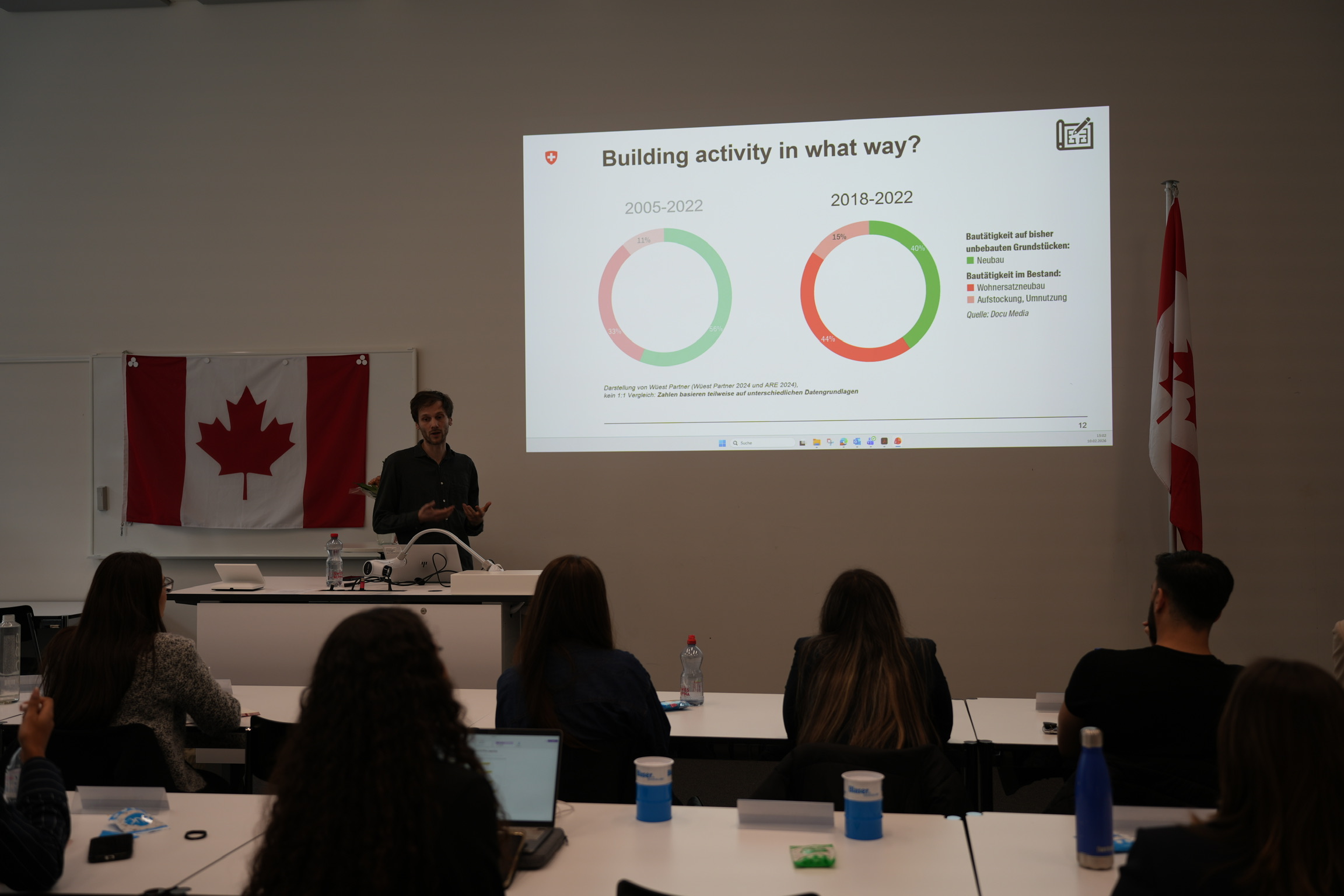
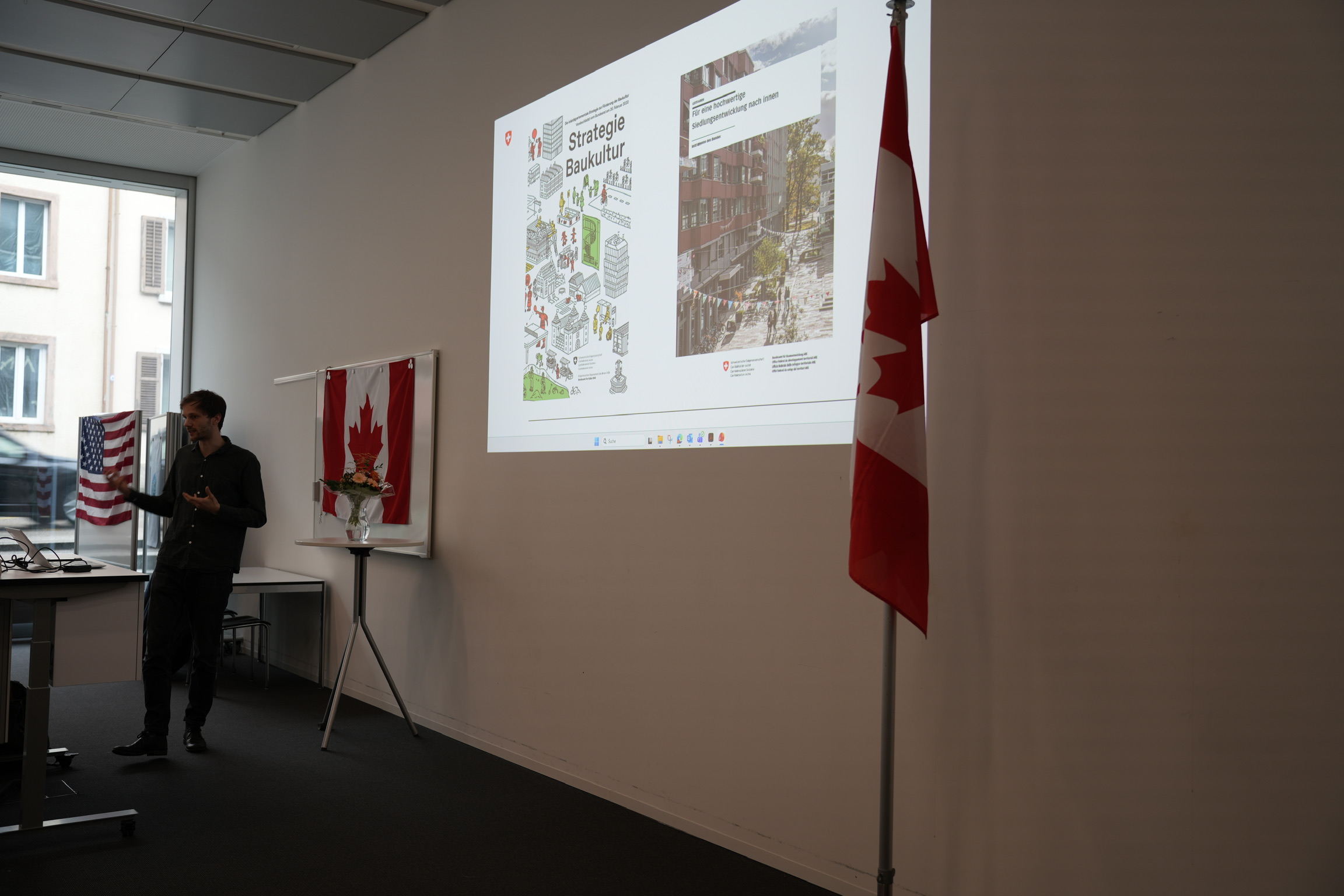
On the second day of the Seminar in Switzerland, we had the opportunity to gain valuable insights from Dr. Stefan Wittwer from the Federal Office for Spatial Development (ARE). His presentation helped us better understand how urban development and spatial planning work in Switzerland and what is needed to create cities that are sustainable and livable in the long term.
Evidence-Based and Structured Decision-Making
One of the most important learnings was how structured and evidence-based the planning process is. New projects are not simply built wherever there is free space. Instead, data and research are used to analyse housing demand, demographic trends, and environmental impact. This ensures that development decisions are not only economically driven but also socially and environmentally responsible.
Stakeholder Engagement and the Role of Compromise
A second key point was the importance of early stakeholder engagement. Before a project moves forward, different groups such as residents, local authorities, planners, and investors are involved in discussions. This helps to avoid conflicts later and allows different perspectives to be considered from the beginning. We learned that compromise plays a major role in spatial planning. It is about balancing housing demand with quality of life while also considering future generations.
Urban Design and Switzerland’s Focus on Inward Development
The session strongly connected to the connectUS theme of Urban Design. Smart planning can balance growth, sustainability, and liveability. Instead of uncontrolled expansion, Switzerland focuses on inward development, meaning that existing areas are used more efficiently before building on new land. This approach protects green spaces, reduces urban sprawl, and supports more compact cities.
Inclusive Mobility Through Smart Spatial Planning
We also saw connections to Inclusive Mobility. Good spatial planning ensures that housing, workplaces, and public transport are closely linked. This reduces long commuting distances, lowers traffic congestion, and makes daily life easier and more accessible for different social groups.
Conscious Consumption and Responsible Land Use
The theme of Conscious Consumption was reflected in the responsible use of land and resources. Since land is limited, careful planning prevents waste and promotes long-term thinking rather than short-term profit.
Digital Tools and the Importance of Digital Balance
Finally, Digital Balance plays a role through the use of data, digital mapping, and evidence-based tools that support decision-making while still keeping human needs at the centre.
Conclusion: Building Resilient Cities Through Vision and Collaboration
Overall, the day showed us that resilient cities are not created by chance. They are the result of careful planning, collaboration, and a clear vision for the future that benefits society as a whole.
Reach Out & Become a Partner
Contact Us Here
