
From Toronto’s Skyline to Sustainable City Living: First Impressions from Canada 🇨🇦

Our journey in Canada began in Toronto - a city known for its diversity, innovation, and dynamic urban life. After arriving on Friday evening, we kicked things off with a welcome drink, setting the tone for the days ahead filled with exploration, exchange, and new perspectives.
A Powerful Start at Niagara Falls
Our first full day took us straight to one of Canada’s most iconic natural landmarks - the breathtaking Niagara Falls.

Surrounded by mist, roaring water, and incredible views, it was the perfect way to begin our journey. For 14 of our 28 participants, the experience didn’t stop there, they took it to the next level with a zipline ride alongside the falls.
A powerful start combining nature, adrenaline, and unforgettable first moments together.
Innovation Through Diversity at Sheridan College
On Tuesday, our focus shifted from infrastructure to people. At Sheridan College, we explored how culture and diversity influence innovation, not just as a concept, but as a lived reality.

Through lectures and discussions with local students, we learned that Canada’s multicultural identity is not only a defining feature, but a key driver of creativity and progress. Different perspectives lead to better solutions, especially when addressing complex challenges such as urban development and housing.
These conversations also highlighted pressing issues, including rising housing costs and the growing demand for affordable living. What stood out was the approach taken to tackle these challenges: rather than focusing solely on new construction, there is a strong emphasis on renovating and reusing existing buildings, as well as using locally sourced materials to reduce environmental impact.
At the same time, Sheridan emphasised the importance of building communities and shaping an economy that reflects ongoing social and cultural change. Innovation, in this context, is not only about technology or design, but about people, collaboration, and shared perspectives.
A special thank you goes to Stan Kamzol for the long-standing partnership and for making this exchange possible.

Ultimately, this visit reinforced one of our key takeaways: designing tomorrow means integrating environmental responsibility, social inclusion, and cultural awareness into how cities are built and lived. Shaping better cities also means shaping better ways of living.
Rethinking Urban Spaces at Waterfront Toronto
Some cities don’t just grow, they evolve with intention. During our time in Toronto, we saw how urban spaces can address environmental, social, and cultural challenges.
At the City of Toronto, we were introduced to an important perspective at the very beginning:
“The land we are meeting on is the traditional territory of many nations…”
This acknowledgment set the tone for a broader understanding of urban development, one that includes history, identity, and Indigenous perspectives.
Through insights into the Waterfront Toronto project, we learned how a former industrial and contaminated harbour area is being transformed into a resilient and future-oriented urban space. Projects like the new island “Ookwemin Minising” show how cities can actively adapt to environmental change.

What stood out most was how nature is being reintegrated into the built environment. Instead of separating urban life from natural systems, the project combines green spaces, biodiversity, and native species to create a more sustainable and livable city.

This directly reflects one of our seminar’s key ideas: that thoughtful urban design can encourage more sustainable everyday behaviours. At the same time, the integration of cultural and Indigenous perspectives highlights that shaping cities is not only a technical challenge, but also a social and cultural one.
But designing cities is not only about spaces, it’s also about how people move within them.
Inclusive Mobility with the TTC
In the afternoon, we explored the Toronto Transit Commission (TTC), where mobility is understood as more than transportation - it is a key element of social equity.
We were welcomed by a bus displaying “ConnectUS” on the front, creating a memorable start to our visit. Through presentations and a live experience, including a community bus, we gained insights into how different modes of transport are coordinated and how accessibility is prioritised across the system.

The TTC shows how inclusive mobility systems can make a city accessible to everyone, regardless of income, age, or physical ability. This directly reflects one of our seminar’s key themes: designing sustainable and inclusive mobility. While efficient public transport reduces congestion and environmental impact, its true value lies in enabling participation.
When people can move freely, they gain access to education, work, and social life, making mobility the foundation of opportunity. One particularly impactful moment was hearing from Debbie Gillespie, who is visually impaired and was accompanied by her guide dog. Through her work supporting accessibility, she shared firsthand insights into how inclusive design is implemented in practice.
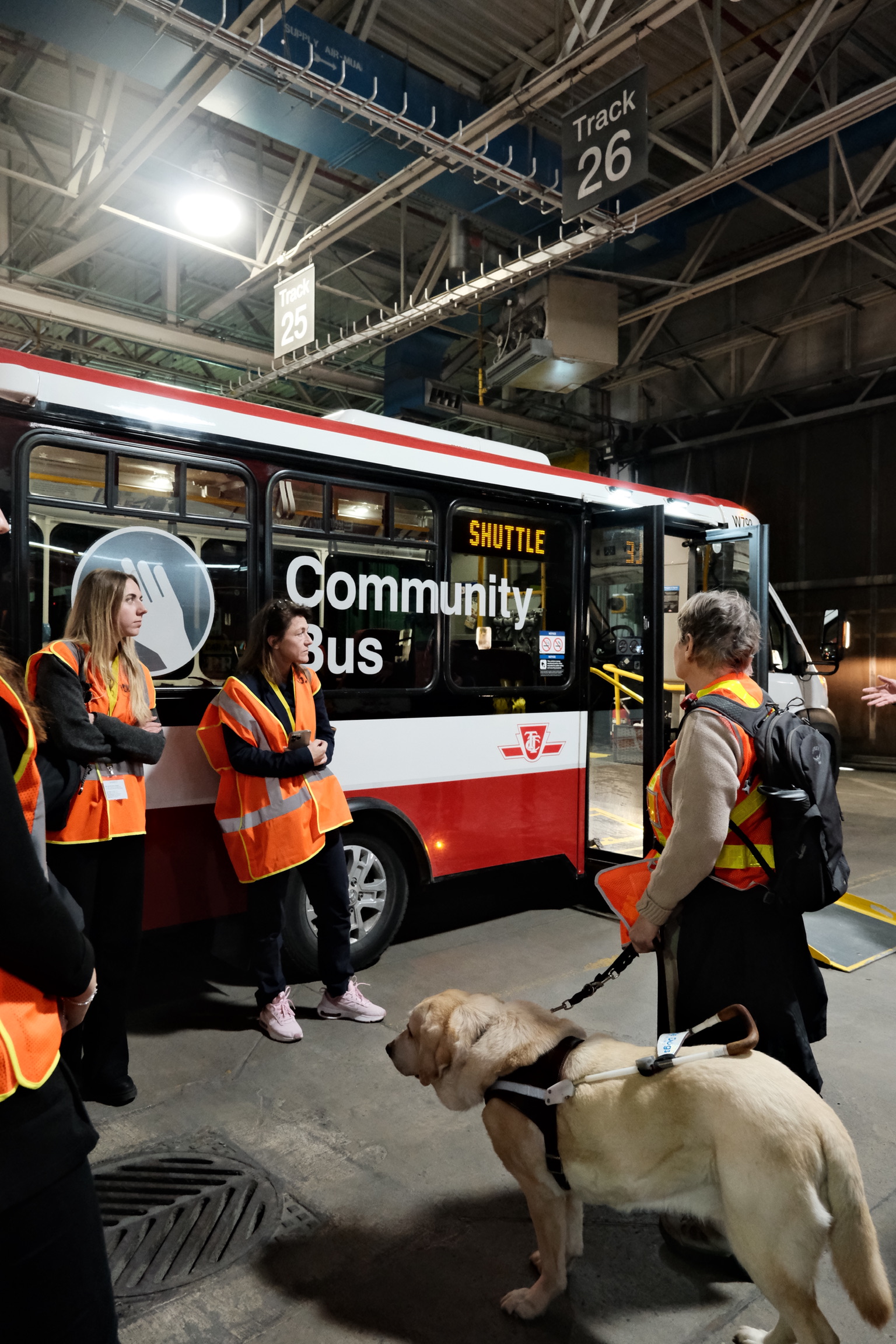
This experience brought our seminar’s vision of inclusive mobility to life, showing that innovation must be both technological and social to ensure that no one is left behind.
Dining Above the City: CN Tower
On Monday evening, we experienced Toronto from above at the CN Tower.

With breathtaking views over the illuminated skyline, the setting was unforgettable. What made it truly unique was the rotating restaurant, allowing us to slowly take in the entire city from every angle, without even leaving our seats.
A special moment combining perspective, atmosphere, and shared experience.

Raptors Game Night
On Sunday evening, we experienced the electric atmosphere of the Toronto Raptors facing the Orlando Magic at the Scotiabank Arena.

With a dominant 139–87 win for the Raptors, it was more than just a game, it was an unforgettable experience. The energy in the arena, the fans, and the intensity on the court made it a truly special evening together.

Ottawa - Understanding What Shapes Cities
Toronto showed us how cities evolve through innovation, diversity, and everyday urban life. But to truly understand how cities function, we need to look beyond what is visible.
In Ottawa, we dive deeper into the systems behind the city, where governance, culture, and sustainability come together. As Canada’s capital, Ottawa offers a unique perspective on how urban life is shaped not only by design, but by decisions, structures, and public spaces.
It’s a place where livability, green spaces, and cultural identity are not separate elements, but part of one connected system.
Stay tuned for what’s next. We’re just getting started.
Reach Out & Become a Partner
Contact Us Here
